We tend to talk about “second acts” as if they’re dramatic reinventions—people torching their past lives and emerging brand new. I was a lawyer for twenty years before I switched careers and became a writer, and other lawyers often ask “How did you get out?” as if I escaped from prison. In truth, my second act as a writer is not as dramatic of a reinvention as that. Instead, it was a long and slow evolution.
It took a long time to make my second act happen, but writing was something I always wanted to do. It was simply a part of myself I’d never figured out how to let live.
My own first act made sense. I always loved to read and write, and after realizing a PhD in English literature wouldn’t be fun if I was already sick of analyzing Dante after studying English literature in college, I decided to use my reading, writing, and analytical skills to become a lawyer. I went to law school, got a great job as a corporate lawyer—and promptly realized corporate law was not a good match for me. I switched to trusts and estate law (which was a better match), and from the outside, it probably looked like I had finally figured it out. And in some ways, maybe I had.
But underneath it all, I had a growing sense that I was living out of alignment with myself. On the side, I kept trying to finish a novel, but something always got in the way. One day, I walked into a free writing class in Boulder, Colorado, and left with the realization that if I truly wanted to write, I needed to make changes—to take writing classes, develop a writing community, and prioritize time for writing.
Writing felt like a secret hobby at first, something fragile I didn’t want to expose to scrutiny, and I kept quiet about it. But the more I wrote, the more I noticed how different I felt than when I was working as a lawyer. I relished playing with words and falling into rabbit holes of novel research instead of looking at inheritance laws or the tax code. I lost track of time when I was writing because I loved it. I never looked at my watch or wondered when I could go home.
Once I saw it, the idea of staying on the path I was on as a lawyer felt harder to justify. Not because the path was bad—it wasn’t—but because it wasn’t mine in the way I needed it to be, and I realized that I didn’t want to wake up at ninety years old and say “I wish I would have tried harder to make writing my career.”
There’s a misconception that making a big change means you chose wrong the first time, or didn’t know yourself well enough. I don’t see it that way. My story includes many references to me doing something only to “realize” it wasn’t exactly right, and those realizations were part of my evolution. I did things that made sense for my skills and interests, my family, or my financial needs, and I don’t regret those choices even though it took me longer to get where I am today. Sometimes you have to walk far enough down one road to know it’s not the right road, and be willing to recognize that time on the “wrong” road for what it is: information (not wasted time) to add to your road map so you can find your way to the correct road.
Eventually, my decision to prioritize writing meant leaving the law, and that was terrifying. I wasn’t only leaving a paying job; I was also leaving behind part of my identity, something I was good at, and making a choice to be a beginner again, to be the person in the room who knew the least. I was embracing uncertainty about whether I’d ever be published or make any sort of a writing life work. I soon discovered that even on the hardest and most uncertain writing days, I felt more like myself than I had in a long time. Instead of writing wills and trusts and letters to clients, I was writing creatively—short stories and the beginnings of a novel.
That’s why I believe second acts aren’t always about reinventing yourself from scratch. They’re also about uncovering what’s been true the whole time. They’re about recognizing when a life you built has stopped working—and having the courage to adjust. It’s easy to say you’ve invested too much time or money or identity in the first act to take a chance on the second. But the truth is that course correction is one of the most human things we do. We grow and learn by realizing when something isn’t right.
I was always pulled toward words; I just didn’t give myself permission to follow the creative part of that pull until later in life. Once I did, I began my slow evolution from a lawyer working with words to a writer playing with them, my second act.
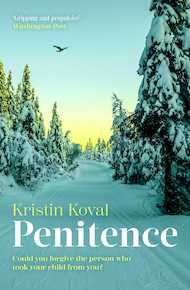
- PENITENCE by Kristin Koval
- Publisher : Celadon Books
- Publication date : 28 Jan. 2025
- Language : English
- Print length : 320 pages
- ISBN-10 : 1250342996
- ISBN-13 : 978-1250342997