A regularly irregular column of musings on (mostly) crime and thriller fiction both ancient and modern. Think of it partly as the ramblings of someone who has read more thrillers than he needed to and some so you don’t have to, and partly as a warning from history.
In the Heat of the Day
Ignoring the now blasé headlines announcing Phew! Wot a(nother) Scorcher, I defied yet more heatwave temperatures to travel to London to attend the launch of Tom Mogford’s new historical novel The Saffron Thief [HarperCollins], although I should say ‘T.L. Mogford’ now he has gone legit and moved on from the excellent private eye novels he used to write as Tom.
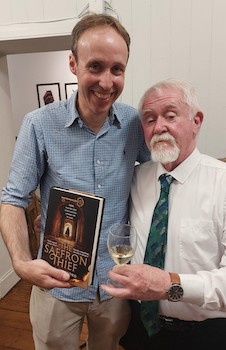
The Saffron Thief is set in 1666 as London tries to recover from the most vicious heatwave of all, as caused by the Great Fire. Two orphaned brothers – one notably dimmer than the other – have to rebuild the life of their family’s fortunes and the dim brother chooses the quick way by believing in alchemy, as so many in the City have done since. Base metal, he discovers cannot be turned into gold and he soon finds himself (legally) in massive debt to a dodgy alchemist (is there any other sort?). The sharper brother, however, realises that saffron, that most precious of spices, can be turned into gold, or at least exchanged for it, ounce for ounce. All he has to do is head off to (Saffron) Walden in darkest Essex at harvest time and steal some, aided and abetted by a feisty local Essex girl.
I know that Shots editor Mike Stotter was impressed with the book’s descriptions of seventeenth-century London, as it records many of the sites he visited whilst tracing his family history. However, when Mike discovered that some of his ancient forebears had lived in Pudding Lane and had listed ‘arsonists’ as their trade and profession, he abandoned his research.
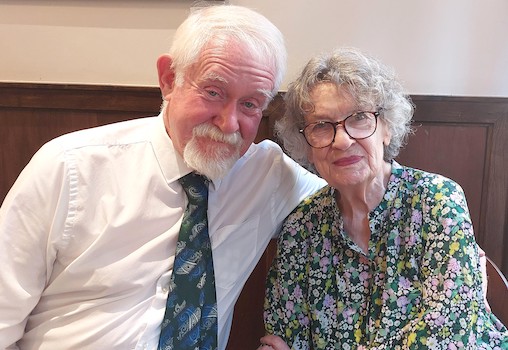
I could not let a rare trip to the capital pass without meeting up with my old chumette Ruth Dudley Edwards. As usual, we settled down to set the world of crime writing to rights but soon gave up on that and concentrated on a chilled bottle of Verdicchio.
To sustain me on my trip into the inferno that was a West End of slowly roasting tourists (though I do give five stars on Tripadvisor to the air-conditioning on the Elizabeth Line), I took along a new paperback original published by Faber which had been sourced for me by Richard Reynolds’ Bodies in the Bookshop in Cambridge, where, I believe, it is selling well. I had ordered a copy because I had heard good things about the author’s previous work, including from friends who insisted I would appreciate it.
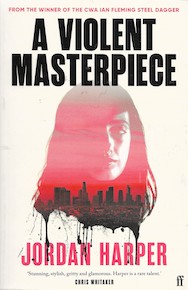
Jordan Harper’s A Violent Masterpiece could be ultimate example of nominative determinism (if I’ve got that right) in that it is certainly violent and it might just be a masterpiece as no one has taken such a chain saw to the soft underbelly of Los Angeles since James Ellroy in the 1980s. Comparisons are inevitable with the legendary L.A. Quartet and Jordan Harper (who I think has a dog called Ellroy) is the first to acknowledge them. A Violent Masterpiece is a coruscating examination of Los Angeles where the grossest of crimes – and the ghouls who avidly follow their progress – all seem accepted as regular occurrences. This is a powerful crime novel and not one for the faint-hearted but one which is surely in the annual awards’ stakes already.
Mentioning the War
The late Len Deighton was a regular reader of this column and its predecessor for more than fifteen years and rarely an issue went by without him sharing his thoughts on its contents. He would often ask what non-fiction I was reading, clearly worried that I was reading more crime and thriller fiction than was good for me.
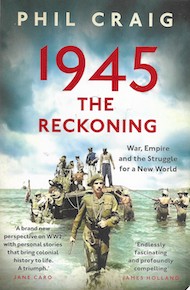
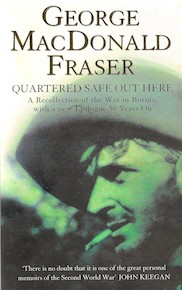
I am sure, as we shared an interest in military history (him far more professionally than me), he would have been interested in what I had made of 1945 The Reckoning by Phil Craig [Hodder & Stoughton]. In truth, I was slightly disappointed in it as I had expected more economic and political analysis of the imploding British, French and Dutch empires in the Far East following the defeat of Japan in 1945. The Reckoning is a popular history drawing on secondary sources and is very readable indeed, especially on the main section which deals with India – where I learned much about the activities of Subhas Chandra Bose and the Indian National Army. Other former colonies such as French Indo-China and Dutch Indonesia are less well covered and for the economically valuable British colony of Burma, the book relies heavily (totally?) on the superb memoir Quartered Safe Out Here by George MacDonald Fraser, the author of the wonderful Flashman novels. It is strange then that Phil Craig does not adopt the same technique when it came to the Dutch colony of Java and utilise the experiences and writings of Laurens van der Post, who was a prisoner there during the war and involved in the chaotic aftermath of the peace.
Dames, Molls, Skirts, Frails and Cuties
Are all expressions you are unlikely to see in book titles these days, as are cover illustrations signed simply Heade, the trademark of the best-known illustrator of the “girlie” pulp paperback trade which flourished in Britain in the late 1940s and early ’50s. Whilst many if not most of those rapidly-produced thrillers have been long forgotten (the expression ‘not worth the paper that should have been recycled’ springs to mind), their covers have not and the artwork of ‘Reginald Heade’ (Reginald Cyril Webb, 1901-1957) continues to be celebrated not only for its flamboyant depictions of females but because behind the garishness there lies an interesting nugget of British social history.
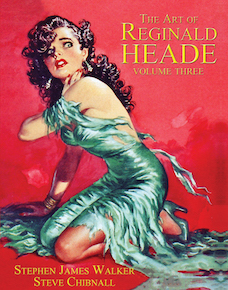
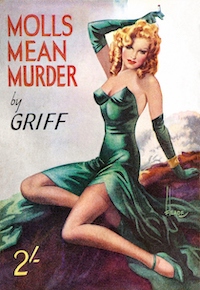
Telos Books, in what must be a labour of love, have just published The Art of Reginald Heade Volume 3 by Stephen James Walker and Steve Chibnall, lavishly illustrated with examples of Heade’s work and although he produced covers for more than 300 books, his work is synonymous with the faux-American gangster pulp fiction of ‘Hank Janson’ – something of a British publishing sensation. Heade’s covers (now known as ‘good girl pin-up art’) undoubtedly helped popularise the Hank Janson titles, which were the creation of Stephen D. Frances (1917-1989) in their boom years between 1946 and 1953, especially among curious schoolboys.
From 1951 onwards there was a distinct backlash against what was seen as a wave of obscenity; bookshops were raided and booksellers, publishers and distributors were fined as local authorities clamped down. (The borough of Blackburn seemed particularly keen on pursuing and destroying publications ‘liable to deprave and corrupt.’) Things came to a head – no pun intended – in 1954 when the publishers of the Hank Janson books (though not the author) were prosecuted and imprisoned under the Obscene Publications Act.
Apart from their attitude to women (‘frails’, ‘skirts’, ‘dolls’ etc.), the Hank Janson books would probably be pushed to raise an eyebrow, let alone anything else, these days but they do give fascinating insights into the mores and social norms of post-war Britain. Much the same can be said of the (almost forgotten) thrillers churned out by Peter Cheyney and the more garish titles of James Hadley Chase, whose paperback covers in the late 1960s made Reginald Heade’s ‘pin-ups’ look positively tame.
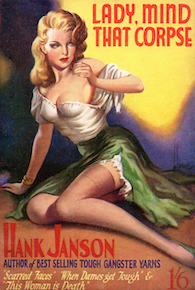
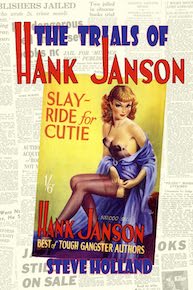
I doubt that Hank Janson’s ‘tough gangster yarns’ would risk prosecution these days – I certainly hope not for the sake of Telos Publishing who have just released new editions of Lady, Mind That Corpse andSister Don’t Hate Me. For the definitive background to the Hank Janson phenomenon and the obscenity trial, a predecessor of the famous 1960 trial of Lady Chatterley’s Lover, pulp fiction enthusiasts and social historians should consult The Trials of Hank Janson, by Steve Holland, originally published by Telos in 2004 but I believe a new edition is available on Amazon.
Who He?
Speaking of Telos Publishing and reflecting on how empty a summer seems without a Crimefestconvention to recover from, brings me to a new book by David J. Howe and his lifelong fascination, perhaps obsession, with Dr Who.
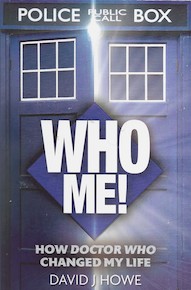
I mention Who Me! [Bedford Square], although it is not the usual sort of book covered in this crime-fiction-based column. I make an exception because not only is David Howe one of the founding fathers of Telos Books but was a regular attendee at Crimefests in Bristol, along with his wife, the writer Samantha Lee Howe, both of them proving to be excellent company in those precious few minutes between panel discussions that delegates were allowed to mingle in the bar.
{Full disclosure: Telos is the publisher of my backlist of ‘Angel’ novels.}
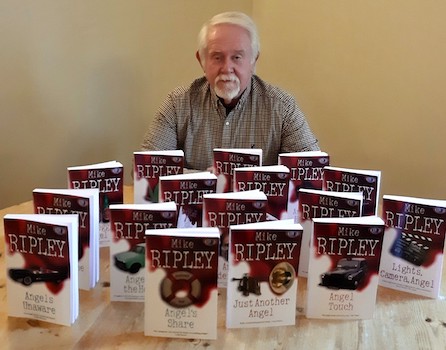
November 23rd 1963 was a day that will live in infamy for David Howe, even though he was only two years old, as it marked the arrival of Dr Who on British television. It was the spiritual, if not actual, start of a sixty-year career, nay, obsession with Dr Who and associated memorabilia and fanzines on a museum-filling scale. Who Me! Is a detailed inventory of Howe’s enjoyment of, and contribution to, the legend that is the time-travelling Doctor – and David has met all but two of the character’s “regenerations” over the years. {One nugget about the third Doctor, Jon Pertwee, was that whilst serving in the navy during WWII he was assigned to HMS Hood in Scapa Flow in 1940 but was transferred to another ship shortly before Hood’s fatal meeting with the Bismark the following year.}
I was disappointed in that Howe does not reveal what the legion of Who fans thought when Jodie Whittaker became the thirteenth Doctor. Personally, I thought it was an innovation far too long overdue: it was about time we had a Doctor who was from Huddersfield.*
(*Jodie Whittaker and I were born three miles – and thirty years – apart in the West Riding which everyone knows is proper Yorkshire.)
Octogenarian Noir
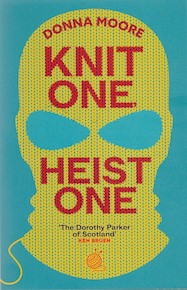
Any mention of Crimefest brings to mind the contribution made by one of the key organisers, Donna Moore who has been seriously ill of late, and I am happy to say that she has a new novel out. Knit One, Heist One [No Exit Press] is right on trend with its setting in a retirement community populated by knitting-obsessed ladies with an unhealthy interest in crime – not crime-solving this time but committing.
Title Challenge?
I have long believed that, in this country at least, you could not copyright a title. Many crime writers have used a title already used by another author – among them Colin Dexter, P.D. James and Tom Bradby – and I discovered only last year that I had used a title in 2002 which Gregory Dowling had used in 1985, though he has graciously forgiven me.
Whilst I was delighted to receive an advance copy of High Tide [Doubleday] by London based Italian writer Livia Franchini, which is published in November, I could not help but recall P.M. Hubbard’s 1970 novel with the same title.
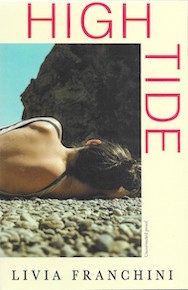
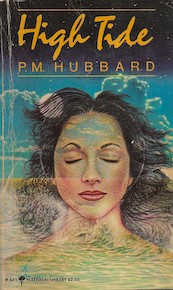
Although not one of his best, there was a time when I scoured second-hand bookshops for anything by Philip Maitland Hubbard (1910-1980) because he had the knack of making something dark, dank and really creepy out domestic crimes in rural settings with a cast of often no more than three characters. His style was unique – I cannot think of anyone who wrote quite like him – and his High Tide was not well-served by a TV-movie adaptation starring Ian McShane in his pre-Lovejoy days.
Multilingual
I have previously admitted that I am attempting to learn Italian one restaurant at a time with additional tuition via Italian television cop shows. Now I have discovered a way to refresh my knowledge of two languages at once thanks to the German Netflix series Barbaren, which also panders to my intertest in Roman history as it tells the story of the catastrophic defeat of the legions led by Publius Quintilius Varus in the Teutoburg Forest in 9AD.
What is so useful about the series – a fictionalised but reasonably accurate history – is that the Germanic tribes speak in German whilst the invading Romans use Latin, resulting in me becoming familiar with new obscenities in two languages.
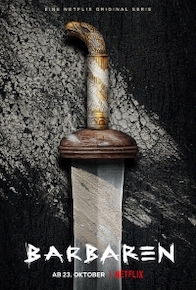
For those who seek an easier introduction to the defeat of Varus at the hands of Arminius, a German folk hero, and the ‘Barbarian’ tribes inhabiting the dark forests beyond the Rhine, the story formed part of the plot of Anthony Price’s excellent spy story A New Kind of War in 1987, which I recommend without reservation and which I still own in a book club edition because I couldn’t afford the hardback and couldn’t wait for the paperback.
Already checking his list…
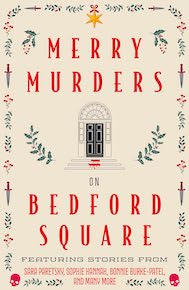
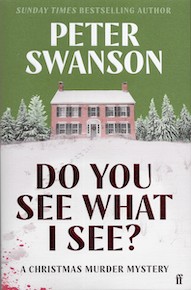
There may be 150 sleeps (give or take) until Christmas, but festive-themes are already being promoted in the crime fiction world, notably with Do You See What I See? By Peter Swanson [Faber in September] and the Merry Murders on Bedford Square anthology edited by Maxim Jakubowski [No Exit Press in October.]
Venice Homework
I am continuing my revision into all things Venetian in advance of the Venice Noir convention in November and have recently enjoyed David Hewson’s The Devil in Dorsoduro [Bloodhound Books] in which retired British archivist Arnold Clover, aided by an annoyingly clever dachshund called Bruno, is drawn into the investigation of the deaths of four women in what seems to be a coven of white witches. Arson, bombs and drug-dealing elevate the investigation way above Arnold’s pay-grade (not that he’s being paid) but along the way David Hewson takes the reader on a guided tour of the byways (there are few highways), piazzas and cafes of this magical city. Sadly, the book was written before Venezia FC magnificently returns to Serie A football next season, nor could it note local fans’ reactions to the sale of Austrian centre back Michael Svoboda to Brighton & Hove Albion… As you can tell, I’m taking this homework thing seriously.
Twenty Years On
It is, remarkably, twenty years since this column, or rather its predecessor Getting Away With Murder, first appeared in Shots, in the summer of 2006.
Looking back in the archive I hoped to find some heartwarming memories of days gone by, but in fact the experience was rather chastening. On the brighter, plus side were mentions of Barry Forshaw’s Rough Guide to Crime Fiction (the ‘rough’ being a publishing brand rather than a qualitative comment) and the formation of new publishing house Quercus. On the downside, there was an item reporting on the funeral of Elizabeth Walter, legendary editor of Collins Crime Club (and Agatha Christie’s last editor). At the service, the eulogy was given by Robert Barnard and the hymn singing was led by fellow Crime Club authors Reginald Hill, Catherine Aird, Marian Babson – all of whom are no longer with us - and myself.
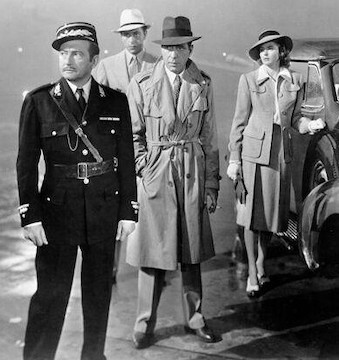
It was, as they say, very much a different time back in 2006 when I joined Shots –- as can be seen in the official staff photograph of myself, Mike ‘Tombstone’ Stotter, Prince Ali Karim and Ayo Onatade, taken at the time.
We’ll always have Shots,
Ciao, Vale, Wiedersehen,
The Ripster.